NATIONAL WAR MEMORIAL
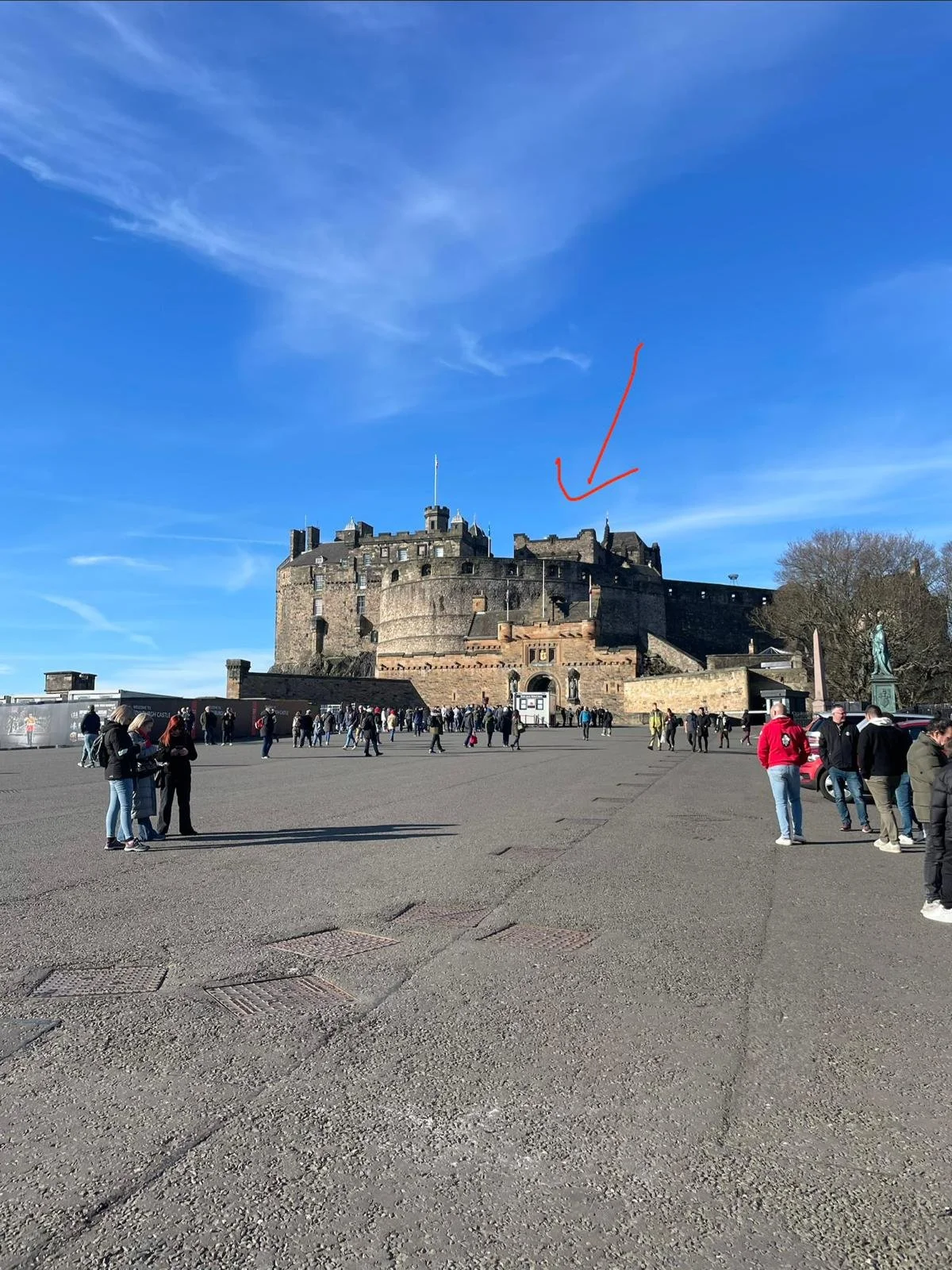
We are starting at perhaps the most iconic building in Edinburgh: Edinburgh Castle.
The castle serves as a rather lovely point of departure, for it was here that the concerns of these first four women council members were first directed when they joined the association.
The First World War had come to an end one year before these women joined the association and had claimed nearly 135,000 Scottish casualties. It was decided that a National War Memorial should be erected.
The moving force behind this vision was the 8th Duke of Atholl and in October 1918, the secretary of state for Scotland established a committee to develop the project. Little side note here – not one member of this committee was a woman.
In April 1919, the architect Sir Robert Lorimer was employed as advising architect and his design was proposed. But, there was something this design possessed which did not sit right with The Cockburn Association: it broke the skyline of the castle.
A series of efforts by the association culminated in a special general meeting that was extensively covered by The Scotsman. It reported that the Duke of Atholl assured the audience that he understood the Cockburn Association’s love for the Castle.
But, things took a rather different turn when Lady Balfour, aristocrat and suffragette cried that the Duke and Robert Lorimer should be hanged!
Long story short, both men lived and they prepared an alternative design which would not alter the skyline in the slightest. This design went ahead although the association continued to keep a vigilant watch with the secretary maintaining correspondence with the duke to ensure there was no breach of the skyline of the castle.
And so, we have the war memorial as it stands today. Look up to the castle and you will be able to see part of the accepted design.
It’s an extremely moving space on the inside, not least because of the sculptural renderings depicting scenes from the war, made by the artist Alice Meredith Williams whose designs have been dubbed a masterpiece, and which were based on her husband’s sketches made abroad while he was fighting. Alice was also invited by the Women’s Work Sub Committee of the Imperial War Museum in London to make a series of panoramic models illustrating women’s wartime roles. Indeed, the national war memorial here also honours the women who have served with its own dedicated section.
Alice was actually a council member of The Cockburn Association from 1923 to 1932 at a time in which they campaigned a number of issues, not least the proposed installation of tramways in Charlotte Square, one of the finest examples of Georgian architecture in the city. The association was approached by residents of the square, to request them to interfere but rather than simply opposing the proposal, they instead suggested that the residents drop their objection and in turn the association would immediately put forward a town planning scheme to preserve the amenity and character of the square. Subsequently, The Edinburgh Town Planning (Charlotte Square) Scheme Order, made under the Town Planning Scotland Act of 1925, was approved in 1930.
Rosaline Masson and Alice Meredith Williams are wonderful examples of the kind of women who shaped the Cockburn Association's council throughout its history. Not lawyers or landowners but writers and artists. What strikes me about the women who have sat on this council over the past century is the breadth of their backgrounds, businesswomen, artists, councillors, campaigners, historians, archivists, and it is precisely that diversity of voice and expertise that has made the Association what it is today.
Head to next stop below.